
A rebate farm is a structured system where traders (or businesses) generate consistent rebate income from trading volume rather than relying on profit from market direction. Brokers and IB (Introducing Broker) networks pay rebates or commissions per lot traded, meaning that if you can generate enough volume, you can build a steady income stream.
Step 1: Understand the Business Model

Rebates are paid per lot traded. For example, if your broker pays $7 per standard lot, and you trade 1,000 lots per month, you collect $7,000 in rebates regardless of trading profit or loss.
Your goal is volume, not trading wins. The system doesn’t require being profitable in trading terms you just need to move volume in and out of the market.
The farm structure is built from multiple accounts, automated trading strategies, and optimized broker setups that together create the “farm” effect, compounding the rebates.
Step 2: Partner with the Right Brokers
Not all brokers are rebate-friendly. Look for:
- High rebate payout rates (per lot traded).
- Low spreads and commissions (to maximize net rebate profit).
- Flexible leverage (so you can scale volume).
- No restrictions on EA/high-frequency strategies (since farms often rely on bots).
Many rebate farmers register as Introducing Brokers (IBs) themselves, so they earn overrides on sub-accounts as well.
Recommended Brokers
- FP Markets → https://fpmarkets.com
- XM → https://www.xm.com
Step 3: Structure Your Accounts

- Master IB Account: Sign up with the broker’s IB program.
- Farm Accounts: Create multiple trading accounts under your IB link.
- Segmentation: Use different VPS servers, IPs, or even legal entities to distribute exposure if needed.
- Capital Allocation: Each account doesn’t need huge funding — the aim is controlled volume churn, not high equity risk.
Step 4: Automate the Trading
The engine of a rebate farm is automation. Strategies include:
- Churn EAs (Scalping/Arb Bots): Place frequent micro trades (hedges, arbitrage, or grid systems) designed to maximize volume.
- Latency Arbitrage Bots: Exploit price feed delays to create fast round-trip trades.
- Hedged Volume Farming: Open offsetting positions on two correlated accounts or brokers to create risk-neutral volume.
- Low-Risk Grid or Range Bots: Constantly generate trades in both directions, reducing exposure.

Key: You don’t care about big profits from trades. You want sustainable volume with minimal drawdown to keep accounts alive.
Recommended Trading Software
- AF Supply & Demand 3.5 PRO – Zone-based, consistent setups →
- AF Blitz Turbo Scalper – High-frequency scalping bot →
- AF MoneySprout – Hedged farming and volume strategies →
Step 5: Calculate the Math

Example 1 (Small Farm – Starter Account)
- Rebate: $3.50 per lot
- Daily volume: 20 lots
- Monthly volume: 400 lots
- Monthly income: $1,400
Ideal for beginners testing the system with a small VPS and one EA.
Example 2 (Mid-Size Farm – Semi-Pro)
- Rebate: $5.00 per lot
- Daily volume: 50 lots
- Monthly volume: 1,000 lots
- Monthly income: $5,000
This is the “sweet spot” for many traders running 3–5 accounts with automation.
Example 3 (Scaling Up – Multiple Brokers)
- Rebate: $6.50 per lot
- Daily volume: 100 lots
- Monthly volume: 2,000 lots
- Monthly income: $13,000
Requires multiple accounts or brokers, but it’s where rebate farms start feeling like a business.
Example 4 (Aggressive Farm – High Leverage)
- Rebate: $7.00 per lot
- Daily volume: 150 lots
- Monthly volume: 3,000 lots
- Monthly income: $21,000
Higher risk, but manageable with strong EAs and hedged setups.
Example 5 (Institutional Level – Full Farm)
- Rebate: $8.00 per lot (negotiated as a high-volume IB)
- Daily volume: 500 lots
- Monthly volume: 10,000 lots
- Monthly income: $80,000
Professional setups at this level often use dedicated servers, prop-style risk controls, and entire teams to manage accounts.
Even if trades break even or slightly lose due to spreads, the rebate income outweighs the cost, leaving net profit.
Step 6: Scale the Farm
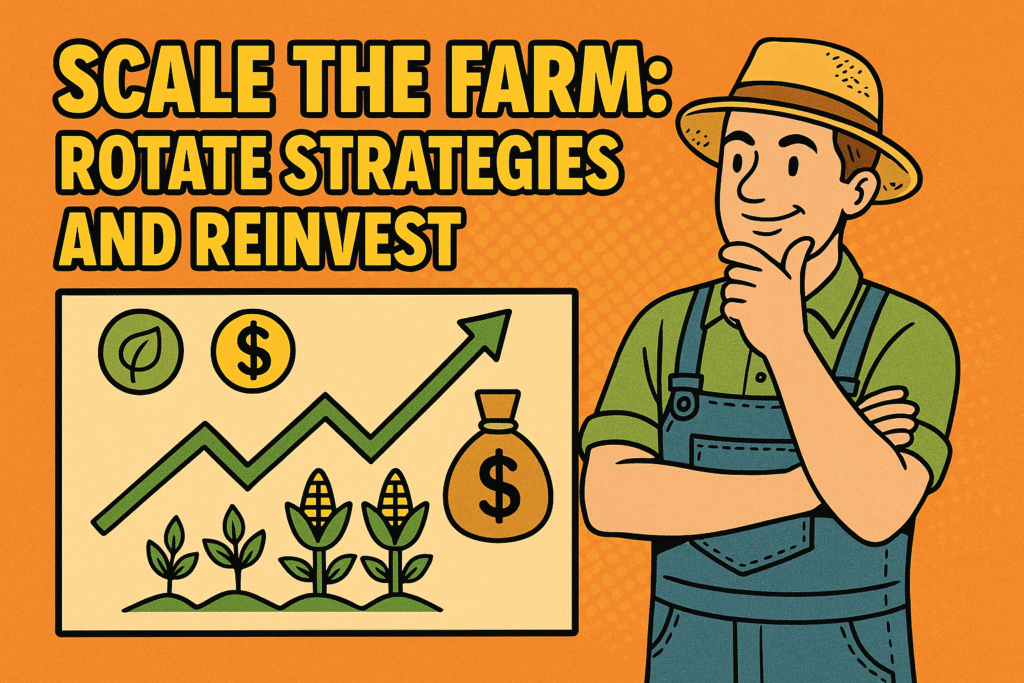
- Increase Accounts: Open more sub-accounts to multiply volume.
- Add Brokers: Spread across multiple rebate-friendly brokers.
- Diversify EAs: Rotate strategies so you don’t trigger broker compliance red flags.
- Reinvest Earnings: Use rebate payouts to fund additional accounts and servers.
Step 7: Risk & Compliance Management

- Broker Risk: If brokers detect excessive “wash trading” or arbitrage, they may reduce payouts or close accounts.
- Drawdown Risk: Even low-risk bots can slip into loss use tight controls.
- Compliance: Be mindful of AML/KYC requirements when running large-scale farms across multiple accounts.
Many professional rebate farmers build offshore entities to run operations cleanly, separating personal accounts from business accounts.
Step 8: Optimize for Maximum Efficiency
- Negotiate Higher Rebates: Large volume IBs can push for higher per-lot payouts.
- Leverage Cashback Partnerships: Some rebate sites will let you piggyback their IB deals if you can’t negotiate directly.
- Track Rebates Daily: Use spreadsheets or dashboards to monitor volume, payout rates, and ROI.
Infrastructure Tools
- ForexVPS.net – Low-latency VPS → https://www.forexvps.net
- BeeksFX VPS – Institutional-grade hosting → https://www.beeksfinancialcloud.com/forex-vps
- Myfxbook – Analytics & tracking → https://www.myfxbook.com
- FX Blue – Free tracking & copier tools → https://www.fxblue.com
Wrapping Up
- A rebate farm thrives on volume, not market direction.
- Automation is essential because no human can churn enough trades manually.
- Scaling is achieved through multiple accounts and brokers.
- The true profit is in the spread between rebates earned and trading costs incurred.
This system can be incredibly profitable if managed well, but it requires discipline, strong broker relationships, and risk controls to avoid being shut down.
This article is a short version of a longer deep dive we shared with our private newsletter readers.
If you want the full billionaire playbook case studies, numbers, and step-by-step breakdowns Subscribe here to get it directly in your inbox.